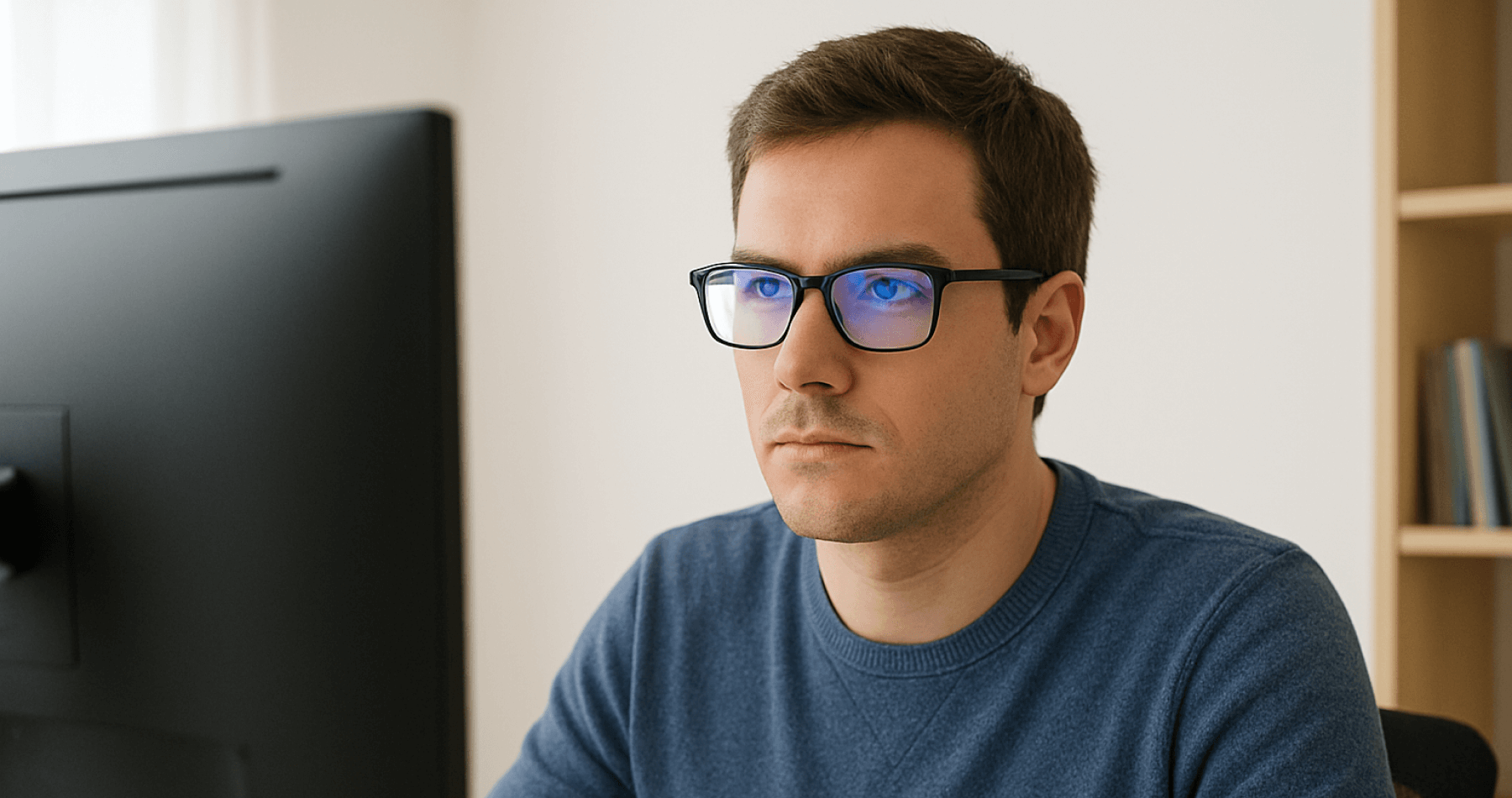
From smartphones and computers to LED lights, our eyes are surrounded by digital screens more than ever before. This increased screen time has led to growing concerns about digital eye strain, fatigue, and sleep disruption - all linked to blue light exposure.
While blue light itself isn’t inherently harmful, excessive exposure from screens can cause discomfort and visual fatigue. The good news? Modern lens technology offers a simple and effective solution. Blue light lenses, like Recharge by HOYA, are designed to reduce glare and filter out high-energy visible light, helping your eyes feel more comfortable throughout the day
Blue light is part of the visible light spectrum, naturally emitted by the sun but also produced by digital devices like laptops, smartphones, and TVs. Because it penetrates deep into the eye, there’s growing concern that long-term exposure could harm ocular tissue such as the macula, similar to how direct sunlight can cause retinal damage or increase risk of cataracts . While blue light also supports alertness and mood, filtering the harmful wavelengths helps protect your eyes from potential long-term effects such as:
While occasional exposure isn’t dangerous, prolonged digital use, especially in low-light conditions, can stress the visual system and make daily screen work uncomfortable.
Blue light lenses are made to selectively filter out high-energy blue light while maintaining clear, natural vision. Unlike tinted or yellow lenses, Recharge by HOYA lenses use a multi-layer anti-reflective coating that reflects harmful blue light and minimizes glare.
This coating not only enhances comfort but also helps reduce reflections from screens and overhead lighting, resulting in clearer, more relaxed vision throughout your day.
Blue light lenses, like Recharge by HOYA, are designed for people who spend extended hours on digital devices, whether it be for work, studying, or entertainment. Some of their benefits include:
If you experience eye strain, dryness, or headaches after long hours on screens, blue light lenses can be an excellent choice. Even if you don’t experience these symptoms, wearing them is still recommended to help protect your eyes from prolonged screen exposure and reduce potential long-term discomfort. They’re especially beneficial for:
Children and teens, whose eyes are still developing, can also benefit from blue light protection, particularly as screen time increases in school and at home.
To get the best out of your Blue Light lenses:
If you’re struggling with ongoing eye fatigue, headaches, or blurry vision, especially after using screens, it’s time for a comprehensive eye exam. Your optometrist can determine whether symptoms are caused by digital strain, refractive issues, or another underlying condition.
Your optometrist can assess your lifestyle, screen habits, and visual needs to recommend whether blue light protection is right for you.
They help reduce glare and filter high-energy blue light from screens, which can cause visual fatigue and discomfort during extended digital use. They’re ideal for students, professionals, and anyone who spends long periods of time on computers, tablets, or smartphones.
For people who use screens several hours a day, they can significantly reduce eye strain, improve comfort, and help maintain natural sleep cycles. Many users also report fewer headaches and less dryness after switching to blue light glasses.
Yes. Blue light lenses can be worn all day since they maintain natural color perception and include full UV protection.
If headaches are caused by screen glare or eye strain, blue light lenses may help reduce their frequency and intensity. However, persistent or severe headaches should still be evaluated by your optometrist to rule out other causes.
With increased screen use for learning and play, children can also benefit from blue light protection to reduce eye strain and support long-term visual comfort. Developing eyes are more sensitive to light exposure, so using protective lenses early can promote healthy visual habits.
They feature a premium anti-reflective coating that reduces blue light and glare without affecting clarity or color. They’re lightweight, durable, and ideal for everyday wear.
Beyond comfort, blue light protection is also about long-term eye wellness. Research continues to explore how chronic exposure to high-energy visible light might contribute to retinal stress over time. While more evidence is needed, many eye care professionals recommend preventive measures, especially for those spending 8+ hours on digital devices a day. Investing in quality lenses isn’t just about easing strain today; it’s about preserving clarity for years ahead. Pairing these lenses with healthy screen habits, like regular breaks and proper lighting, creates the best foundation for lasting visual health.
If your eyes feel tired after a day in front of screens, talk to an optometrist at eye. Optometry about trying Recharge by HOYA.


