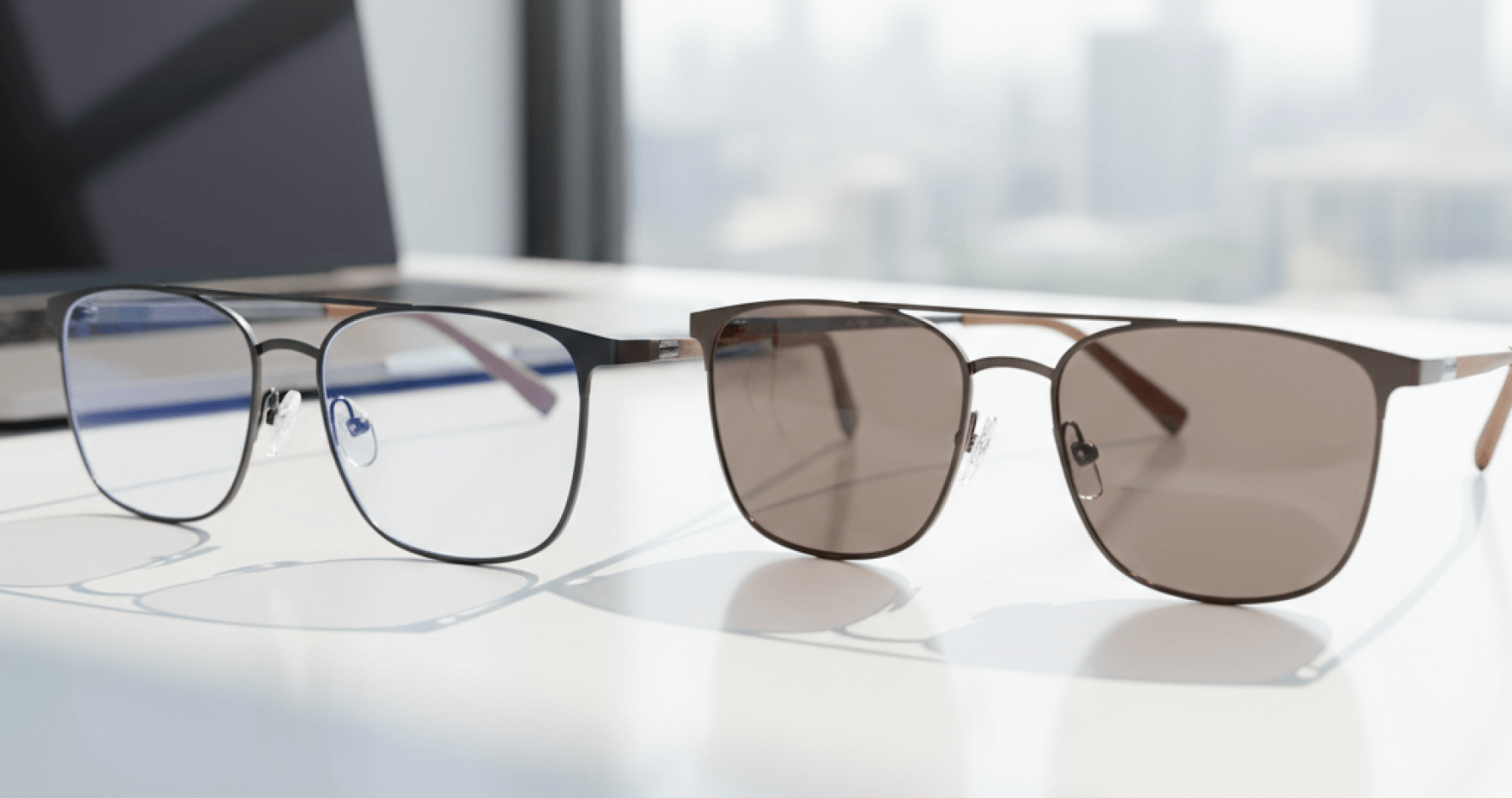
If you’ve ever stepped outside on a sunny day and reached for your sunglasses, you’ll appreciate the convenience of photochromic lenses. Also known as transition lenses, these adaptive lenses automatically darken in sunlight and return to clear indoors, offering protection, and comfort all in one pair.
Photochromic lenses eliminate the hassle of switching between glasses and sunglasses, ideal for those seeking UV protection, glare reduction, and flexibility without sacrificing clear vision. At eye. Optometry, we often recommend them for patients who want both clear vision and long-term eye protection, without needing multiple lenses.
Photochromic lenses are optical lenses that adjust their tint in response to sunlight or UV rays. When exposed to sunlight, the lenses darken to reduce glare and brightness. When you move indoors, or to a more shaded environment, they gradually return to their original state.
They’re a great everyday choice for patients who move frequently between indoors and outdoors, like students, professionals, or anyone living in Vancouver’s ever-changing weather conditions.
Photochromic lenses use photochromic molecules that lie within the lens material. These molecules change structure when they come into contact with UV light, causing the lenses to darken.
Modern options like Sensity by HOYA use advanced technology to respond faster, maintain consistent color, and provide great clarity both indoors and outdoors. Even in their clear state, photochromic lenses continue to block harmful UV rays.
Whether you’re commuting, studying, or enjoying time outdoors, photochromic lenses are designed to keep your eyes protected. Some of their benefits include:
While photochromic lenses are a great solution, they might not be ideal for everyone. Here’s a quick look at both sides:
Pros:
Cons:
During your eye exam at eye. Optometry, our team will walk you through these pros and cons to help determine if photochromic lenses are a good fit for your vision needs and lifestyle.
Photochromic lenses are an excellent choice for those who:
They’re also great for students, professionals, and active individuals. At eye. Optometry, we’ve found that many of our patients, especially those who commute daily, appreciate how these lenses adjust to changing light seamlessly.
Our team at eye. Optometry offers adjustment services to keep your lenses performing their best, ensuring your investment lasts longer.
If you find yourself switching between multiple pairs of glasses, experiencing glare sensitivity, or simply want to upgrade your lenses for great comfort, it may be worth discussing photochromic lenses with your optometrist.
At eye. Optometry, we take time to understand your daily habits, screen exposure, and visual preferences during your comprehensive eye exam. Whether you’re considering Sensity by HOYA or other adaptive options, we’ll help you find the perfect fit.
Book a comprehensive eye exam today.
Not exactly. Photochromic lenses adapt to light conditions, becoming darker outdoors and clear indoors, while sunglasses stay tinted at all times. Many of our patients prefer photochromic lenses for everyday use because they’re more versatile.
Most modern lenses adjust within 30 seconds to 1 minute when exposed to sunlight and clear up in about 2 minutes indoors.
Traditional photochromic lenses don’t darken as much inside vehicles because car windshields tend to block UV light.
For everyday use, yes. For high-intensity sunlight/glare, you may still prefer a separate, polarized pair.
Yes. Children’s eyes are more sensitive to UV radiation, making these lenses an excellent choice for year-round protection. Our optometrists can fit photochromic lenses for kids to help them develop healthy visual habits early on.
Photochromic lenses offer more than just convenience, they’re a great solution for everyday eye protection. By automatically adjusting to different light conditions, they help maintain visual comfort, reduce glare, and shield your eyes from harmful UV rays.
At eye. Optometry, we can help you find eyewear that fits your lifestyle, whether that means adaptive lenses, blue light protection, or specialized coatings.


